The importance of accuracy and efficiency
Every company’s network is different; it’s important to implement a vulnerability scanner that can intelligently scan everything from PCI environments to hospitals with minimal configuration and manual adjustment. This also means that your network vulnerability scanner has to be extremely accurate, with a robust set of vulnerability checks against every major flavor of software and operating system. At times, this also extends to more esoteric systems like SCADA controls.
Most commercial network vulnerability scanners do a good job of keeping up with the latest vulnerability checks; often, what makes or breaks a successful program is what comes next. Network scanning tools enable you to prioritize thousands of vulnerabilities across different types of devices and different segments of your network. This is critical to ensuring that your team is as efficient as possible, since you’ll never have the luxury of fixing every single vulnerability. Once that’s done, you have to get the information to the right people; it’s critical that your network vulnerability scanner has the ability to easily show remediation steps to the people responsible for remediation. Executive level reporting can show management how you’re improving your company’s security over time.
What makes InsightVM and its features ideal for network scanning?
Rapid7 InsightVM is the leading network vulnerability scanner for protecting today’s modern IT environment. So how does InsightVM provide unparalleled visibility into your risk posture, as compared to other scanning solutions?
- InsightVM integrates with your IT infrastructure to more quickly and efficiently identify changes in your network. This includes, but is not limited to, dynamic asset discovery through DHCP, discovery connections with cloud service providers, and assessment of remote assets with the Insight Agent.
- InsightVM is the only network vulnerability scanner that can identify your internet-facing assets (both known and unknown) by integrating with Project Sonar, a Rapid7 research project that regularly scans the public internet to gain insights into global exposure to common vulns.
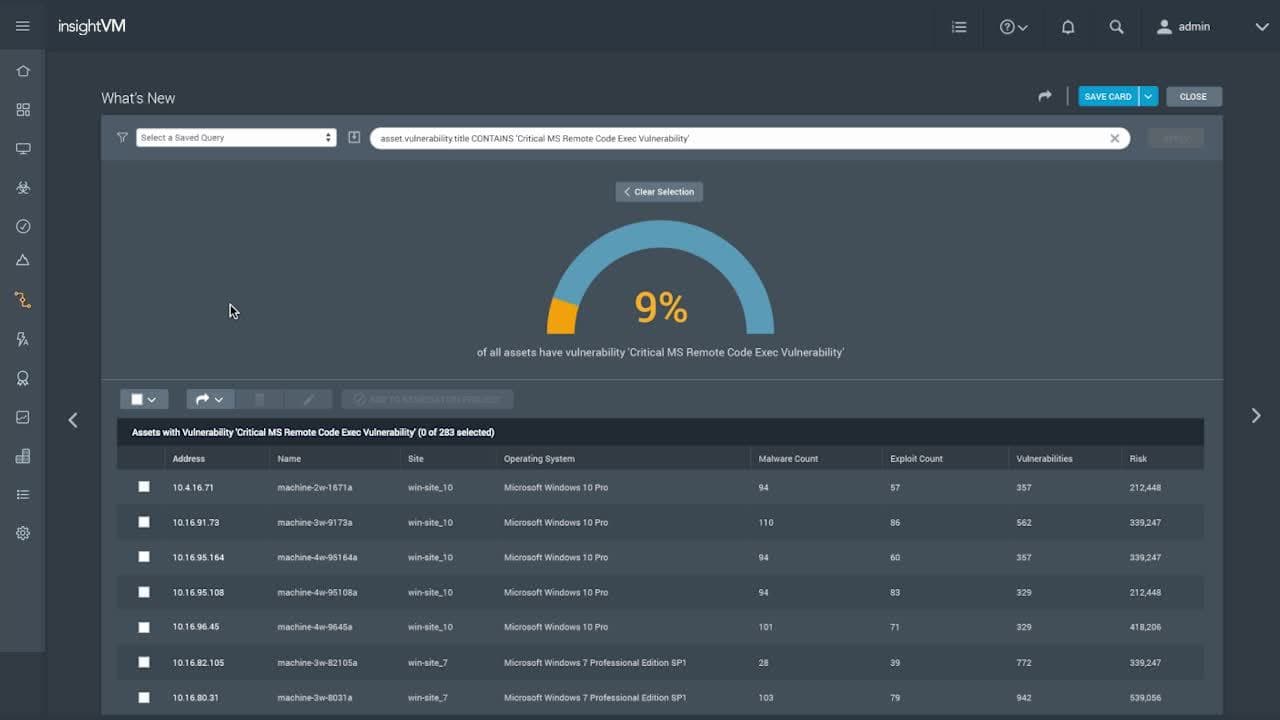
- InsightVM is also the only network vulnerability scanner that automatically prioritizes vulnerabilities based on a combination of CVSS score, exploitability, malware exposure, and vulnerability age. This helps you weed through thousands of results to focus on the vulnerabilities most likely to be used in an actual attack.
- InsightVM integrates with over 40 other leading technologies, allowing you to amplify vulnerability scan data into larger security initiatives across the network.
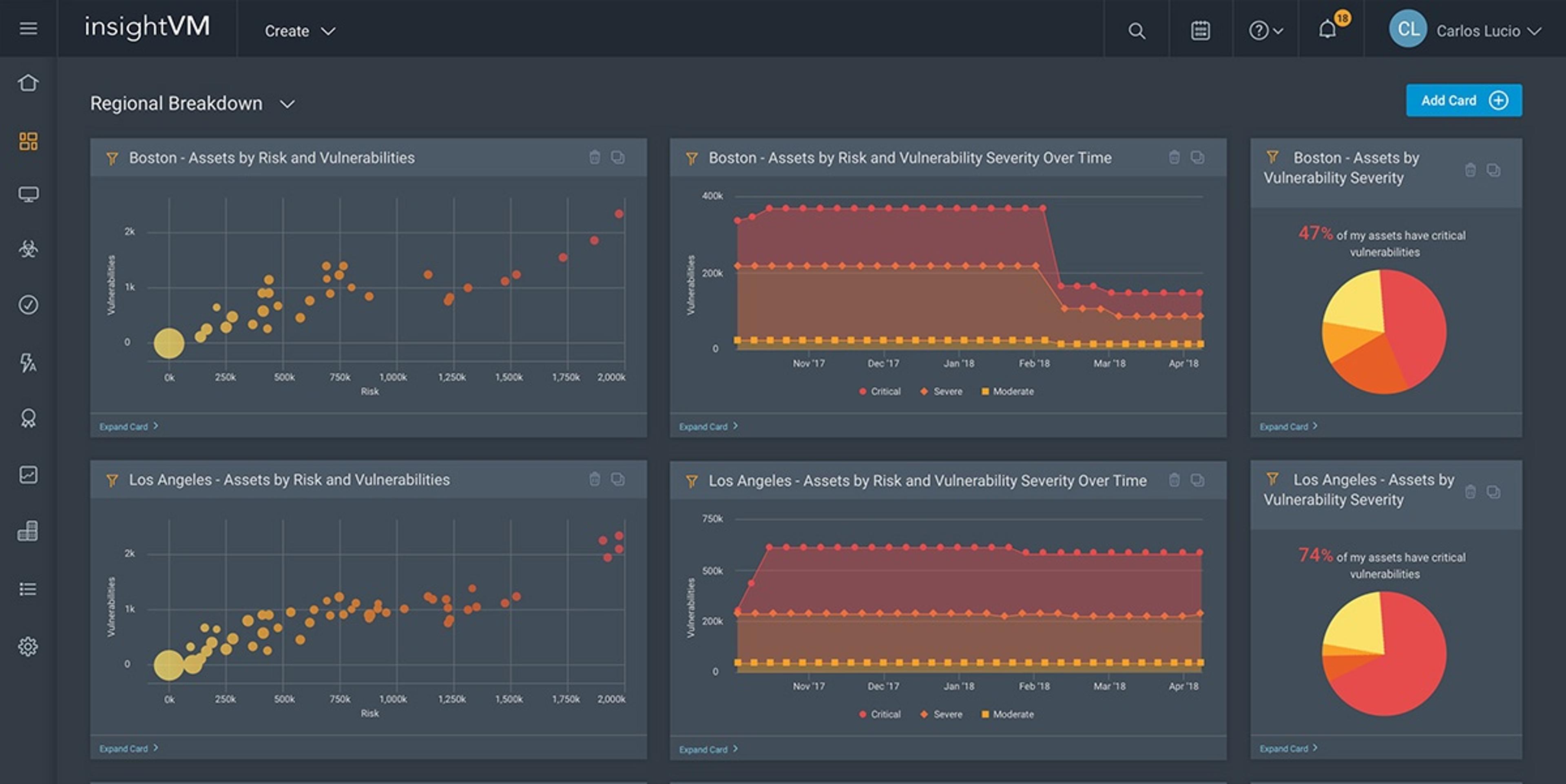
- InsightVM has customizable reporting and Live Dashboards to make it easy for the right people to get relevant information, whether its detailed remediation reports for your system administrators or custom compliance dashboards for your CISO.