
Exposure Command
Risk-Based Vulnerability Management
Prioritize exposures attackers can actually exploit with a more actionable approach to vulnerability management (VM) that goes beyond CVSS and static scoring.
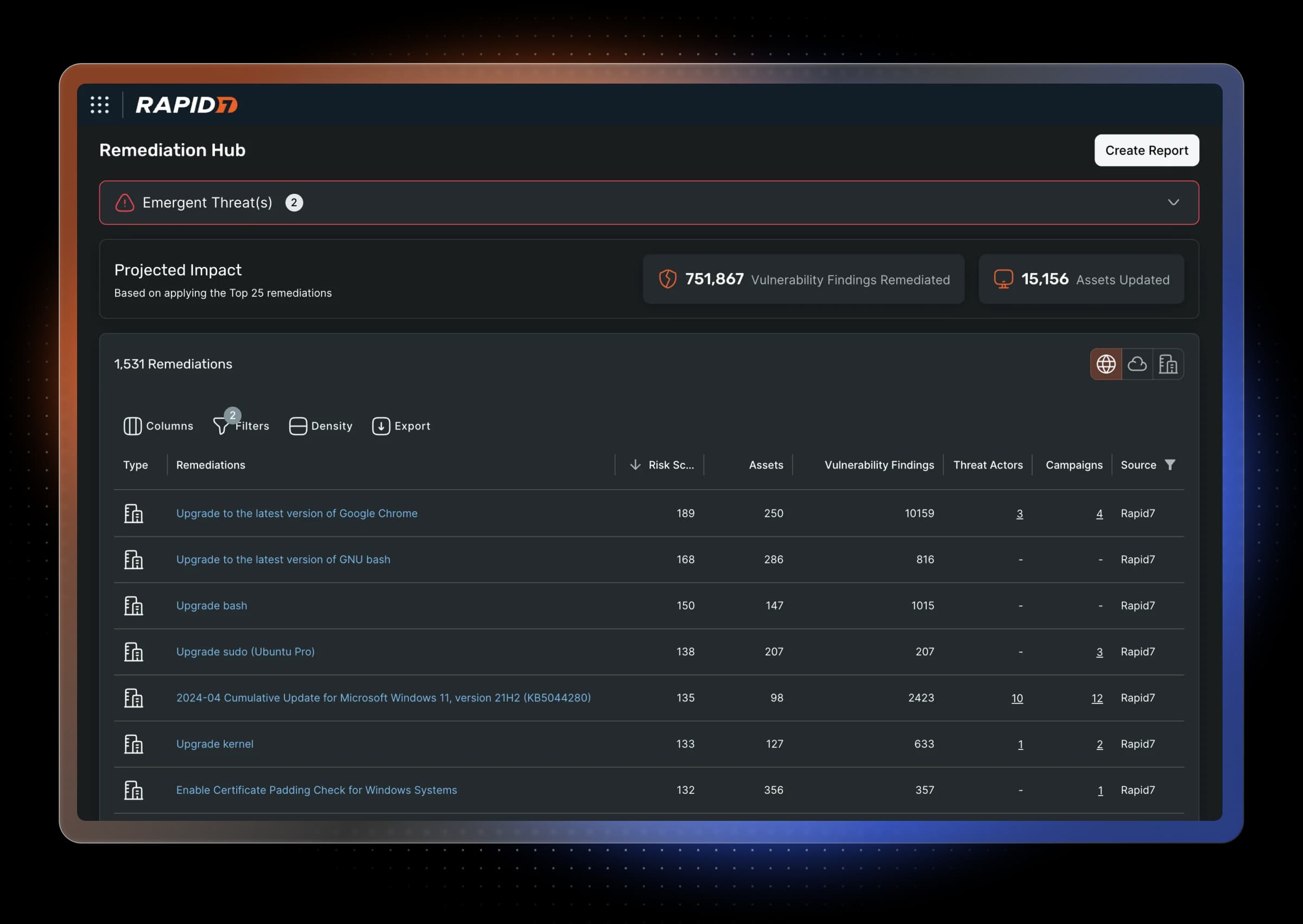
Traditional vulnerability management isn’t doing enough
Traditional VM surfaces issues quickly, but without the context needed to understand the risk and confidently take action.

Too many findings, not enough focus
Static severity scores flood teams with vulnerabilities, making it hard to see which issues actually increase risk.

Limited context can’t reveal risk
Vulnerability data alone doesn’t show exposed assets, reachable attack paths, or issues attackers are most likely to exploit.

Remediation workflows lack clear direction
Teams struggle to prioritize fixes, align security and IT stakeholders, and reduce risk efficiently across systems and owners.
Too many findings, not enough focus
Static severity scores flood teams with vulnerabilities, making it hard to see which issues actually increase risk.
Limited context can’t reveal risk
Vulnerability data alone doesn’t show exposed assets, reachable attack paths, or issues attackers are most likely to exploit.
Remediation workflows lack clear direction
Teams struggle to prioritize fixes, align security and IT stakeholders, and reduce risk efficiently across systems and owners.
How Rapid7 makes risk-based vulnerability management (RBVM) actionable
Rapid7 helps teams pinpoint the exposures that matter most by combining vulnerability exploitability, attacker-aware context, and remediation workflows.
Surface the real risks
Rapid7 RBVM provides continuous visibility and risk scoring to prioritize vulnerabilities based on exploitability and asset criticality.


From Reactive to Proactive: Transitioning to an Effective Exposure Management Program
A stronger path to eliminate threats
Rapid7 helps you modernize vulnerability management without losing the visibility and remediation discipline your teams depend on.

Proven vulnerability management depth
Rapid7 Exposure Command delivers real visibility and proven remediation workflows for vulnerability management combined with exposure-driven risk context.

Context aligned to real attack paths
Rapid7 connects vulnerabilities to exposure and attacker behavior, helping teams see how risk is exploited across environments.

Action informed by prioritization
Rapid7 RBVM prioritizes risk with remediation in mind, helping teams focus effort where it will reduce meaningful risk fastest.
Proven vulnerability management depth
Rapid7 Exposure Command delivers real visibility and proven remediation workflows for vulnerability management combined with exposure-driven risk context.
Context aligned to real attack paths
Rapid7 connects vulnerabilities to exposure and attacker behavior, helping teams see how risk is exploited across environments.
Action informed by prioritization
Rapid7 RBVM prioritizes risk with remediation in mind, helping teams focus effort where it will reduce meaningful risk fastest.
From Vulnerabilities to Exposure: See More. Prioritize Better. Act Faster.
Exposure Command Essentials
- Scan hybrid environments
- Continuous agent visibility
- Real-time vulnerability detection
- Risk-based prioritization
- Remediation projects and SLAs
- Policy and compliance checks
- Unified vulnerability & asset inventory
- Correlate third-party findings
- Identify coverage gaps
- Attack path analysis
- Threat-aware risk scoring
- AI-driven risk insights
- Automated remediation workflows
- Continuous exposure monitoring
Exposure Command Ultimate
- Multi-cloud visibility across AWS, Azure, GCP and K8s
- Cloud and container vulnerability assessment
- Best practices configuration assessment including CIS
- Attack path analysis
- Extended cloud visibility (Oracle Cloud Infrastructure, Alibaba Cloud)
- 100s of out-of-the-box compliance policies and industry standards for Cloud Security
- Infrastructure-as-code (IaC) scanning
- Cloud threat detection
- Real-time cloud visibility with event-driven harvesting (EDH)
- Automated cloud remediation
- Dynamic application security testing
Frequently asked questions
Hit refresh on how you prioritize and reduce risk
See how Rapid7 helps you update your vulnerability posture to a more risk-based, exposure driven approach.