This week on Experts on Experts, I’m joined by Sergio Alonso – Rapid7’s Director of Trust, Risk, and Compliance – to talk about how compliance is changing and why many security teams are rethinking the way they approach readiness, reporting, and operational risk.
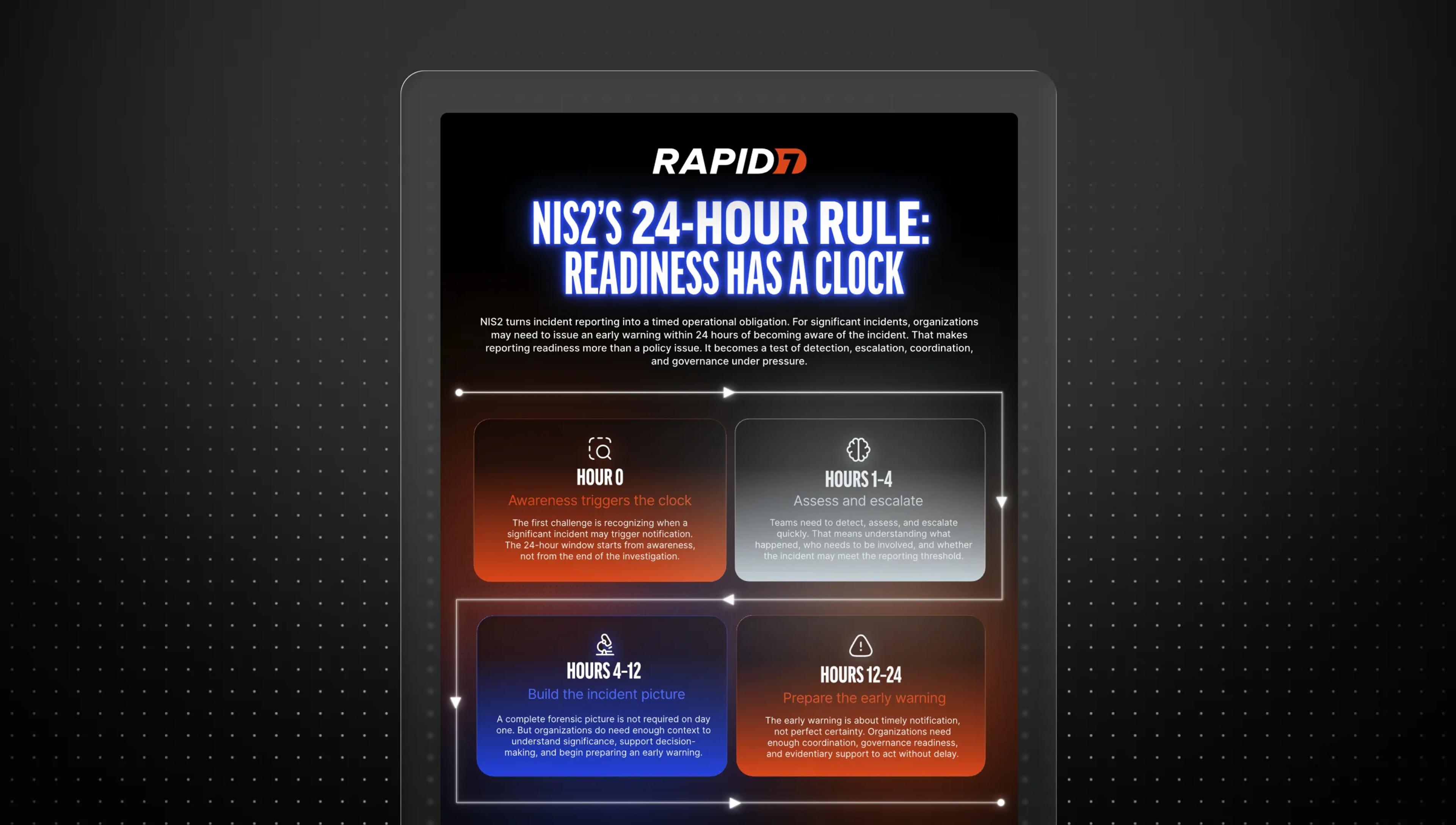
One of the biggest themes in the conversation is that compliance is no longer something organizations can treat as a point-in-time exercise. Frameworks like NIS2 and DORA are increasing expectations around resilience and accountability, while cloud environments and faster release cycles make it harder to prove that controls are working consistently over time.
We also discuss the growing gap between security operations and compliance reporting. Security teams generate huge amounts of operational data every day, but translating that into evidence regulators, auditors, and leadership teams can actually use remains a challenge. The conversation looks at how organizations are trying to reduce manual effort, where automation can genuinely help, and why visibility and ownership are becoming more important as regulatory pressure grows.
Organizations still treat compliance as separate from day-to-day security operations, and the teams making the most progress are bringing those two worlds closer together, treating compliance less like a reporting layer and more like part of the operational workflow itself.
Watch the full episode below to hear the full conversation and how organizations are approaching compliance, risk, and resilience heading into 2026.
⠀