

Keeping you on schedule(r)
The latest release of DivvyCloud (21.3) [Now called InsightCloudSec] encompasses many of the standard changes that we included in each major release, from bug fixes to support for new cloud resources to new filters and other enhancements. As always, all the details are available in the release notes. This month, we’d like to focus on one key area of change included in this release: the scheduler.
Background
Before we get into what has changed, let’s take a look at what the scheduler does and why it’s important. First, it’s important to understand the concept of workers. The term “workers” refers to a process that does something other than serve web requests. A worker may process a queue, run scheduled jobs using process files, or conduct any number of other support-type activities. Workers generally do not interface with users. Think of them as the equivalent of hard-working support staff behind the scenes.
In DivvyCloud, the scheduler is responsible for delegating jobs to the workers. It maintains a job queue in Redis and delegates these jobs to the workers. Jobs fall into three categories:
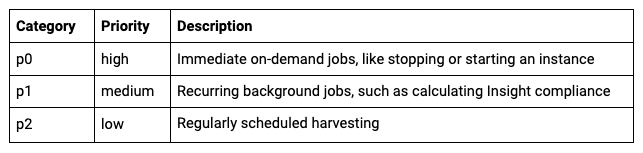
Enhancing the scheduler
Based on user feedback, we uncovered an opportunity to introduce some performance and reliability improvements to the scheduler.
First, we removed bottlenecks in message processing. This allows our users to better visualize which jobs are scheduled while promptly removing those that are finished. In addition, we improved the scheduler log messages to have better context when originating from a Bot. We have also improved visibility and resiliency for recovering information around scheduler thread failures. These improvements are embodied in two new features:
- The System Diagnostics Report widget
- The Scheduler Mailbox Queue count
Through these improvements, administrators are able to quickly access information about how DivvyCloud is performing. Both of these features are now available on the System Administration page. You can read more about these functions and other system settings here.
See something? Say something.We encourage all of our customers to provide feedback on their experience. Notice that something is off, or have a question about a specific DivvyCloud function [Now called InsightCloudSec]? Contact us. We’ll walk you through it—or, if necessary, fix it.