Proactive exposure discovery
Rapid7 continuously discovers known and unknown assets, misconfigurations, permissions issues, and exposures to eliminate risks before attackers find them.

Actionable security intelligence
Rapid7 pairs real-world vulnerability intelligence with business context to deliver clear, prioritized risks so you can act fast. Axonius simply can’t match it.

One platform, less complexity
Rapid7 unifies exposure management and detection and response in a single platform, cutting complexity and seamlessly reducing risk fast.
Proactive exposure discovery
Rapid7 continuously discovers known and unknown assets, misconfigurations, permissions issues, and exposures to eliminate risks before attackers find them.
Actionable security intelligence
Rapid7 pairs real-world vulnerability intelligence with business context to deliver clear, prioritized risks so you can act fast. Axonius simply can’t match it.
One platform, less complexity
Rapid7 unifies exposure management and detection and response in a single platform, cutting complexity and seamlessly reducing risk fast.

Before Rapid7, we didn’t have the tools to fully understand our vulnerabilities or exposures. Now, with these solutions in place, we have a clear picture of our risk and the ability to address it before it becomes a problem.
It’s not just about checking more boxes, but we do anyway
| Use case / Feature | Rapid7 | Axonius |
|---|---|---|
Ingests third‑party external findings; no native scanning. | ||
yes (additional cost) | ||
yes (additional cost) | ||
Third party feeds only | ||
yes (additional cost) | ||
yes (additional cost) |

Expose your risks, not your assets
See everything, know what matters, and take action — all in one powerful platform.
2025 Exposure Assessment Platform Buyer´s Guide
Access the guide to learn how you can make the right MDR purchase decision for your program.
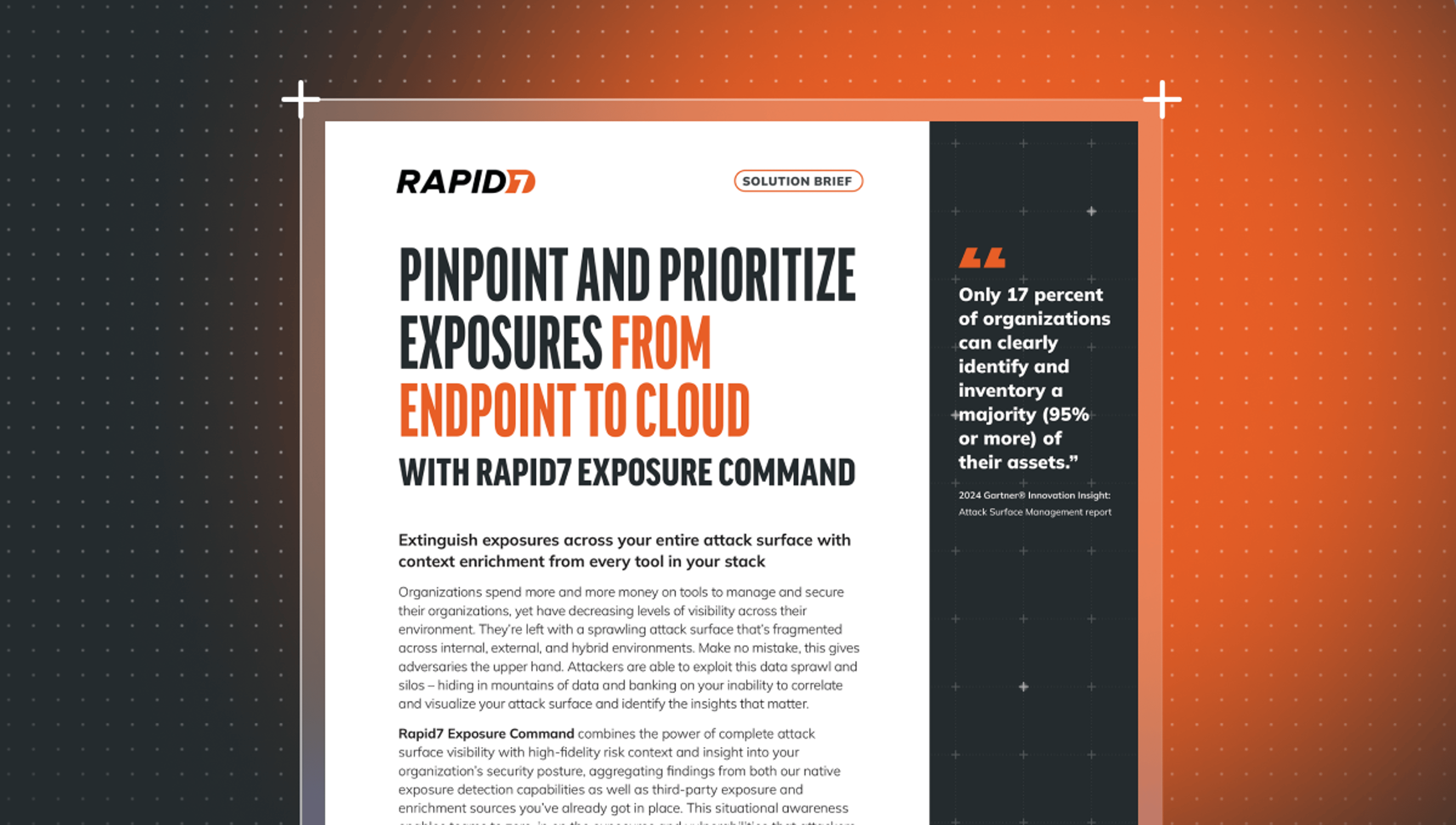
Exposure Command Solution Brief
Pinpoint and prioritize exposures across your entire attack surface from end point to cloud with Exposure Command.