Rapid7 vs. Exabeam
Incident Command combines ASM with SIEM, SOAR, DFIR, and threat intel into one cohesive platform, transforming how modern SOCs operate. Exabeam cobbles different capabilities together; integrating an entirely different platform.
See the entire threat attack surface
Incident Command unifies ASM, SIEM, SOAR, DFIR, and threat intel into a single, scalable solution. Exabeam’s separate ASM has limited integration to their SIEM.
Endpoint-based forensic collection
Rapid7’s Velociraptor enables investigators to hunt for live artifacts and remove malicious remnants of a breach with speed and precision. Which Exabeam lacks.
Realize superior business value now
Rapid7’s the only major SIEM provider with asset-based pricing. Exabeam uses variable ingest-based pricing, making SOCs vulnerable to unforeseen cost increases.
See the entire threat attack surface
Incident Command unifies ASM, SIEM, SOAR, DFIR, and threat intel into a single, scalable solution. Exabeam’s separate ASM has limited integration to their SIEM.
Endpoint-based forensic collection
Rapid7’s Velociraptor enables investigators to hunt for live artifacts and remove malicious remnants of a breach with speed and precision. Which Exabeam lacks.
Realize superior business value now
Rapid7’s the only major SIEM provider with asset-based pricing. Exabeam uses variable ingest-based pricing, making SOCs vulnerable to unforeseen cost increases.
It's not just about checking the critical boxes, but we do anyway
| Use Case / Feature | Rapid7 | Exabeam |
|---|---|---|
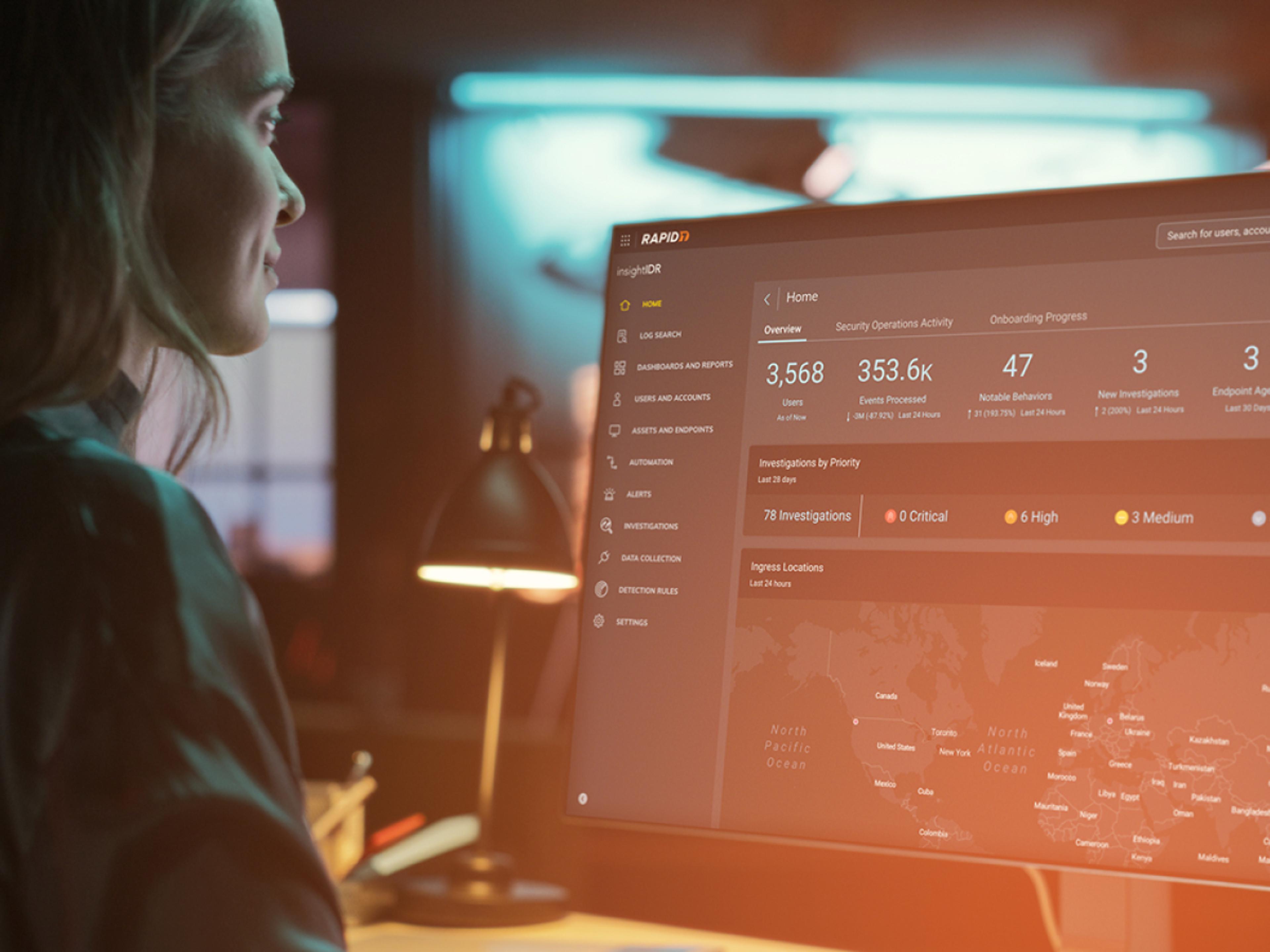
Scale SecOps with AI powered next-gen SIEM
Give your SOC the platform to see everything, understand anything, and act before attackers do.
While Exabeam focuses on user behavior analytics, Rapid7 Incident Command delivers full risk-to-response visibility. Built on the Command Platform, it merges exposure management, threat detection, and orchestration into a single, cohesive platform to eliminate fragmented tooling and quickly provide superior business value.
Rapid7 SIEM uses transparent, asset-based pricing, so costs scale with your environment, not your data volume. This means no surprise ingestion fees or hidden costs. Compared to Exabeam’s usage-based approach, Rapid7 offers predictable value, faster deployment, and full-feature access to automation, analytics, and unified visibility from day one.
Absolutely. Incident Command integrates seamlessly with over 290 tools, including EDR platforms like CrowdStrike, SentinelOne, Microsoft Defender, and Palo Alto Cortex. It ingests logs and telemetry from across your stack, cloud, network, and identity, allowing you to centralize insight and automation without replacing your existing investments.
Rapid7 SIEM deploys rapidly through a SaaS-based architecture, with no complex setup or tuning required. Prebuilt detections, agentless integrations, and auto-normalized data reduce configuration time, while guided onboarding gets teams operational within hours. Compared to Exabeam, Rapid7 delivers faster value with less overhead and zero infrastructure management.
Yes. Incident Command comes preloaded with curated detections tested and validated by our MDR service that are mapped to MITRE ATT&CK®, user behavior analytics, and embedded threat intelligence. It’s designed for immediate, actionable visibility, enabling security teams to detect, investigate, and respond faster without waiting for custom tuning or third-party content packs.
Incident Command automates triage with 99.93% accuracy, filtering out benign alerts and surfacing only real threats for analyst review and disposition. Its AI-driven investigations and SOAR workflows save up to 200+ analyst hours weekly, cutting through noise and letting teams focus on what matters, accelerating outcomes without sacrificing control.