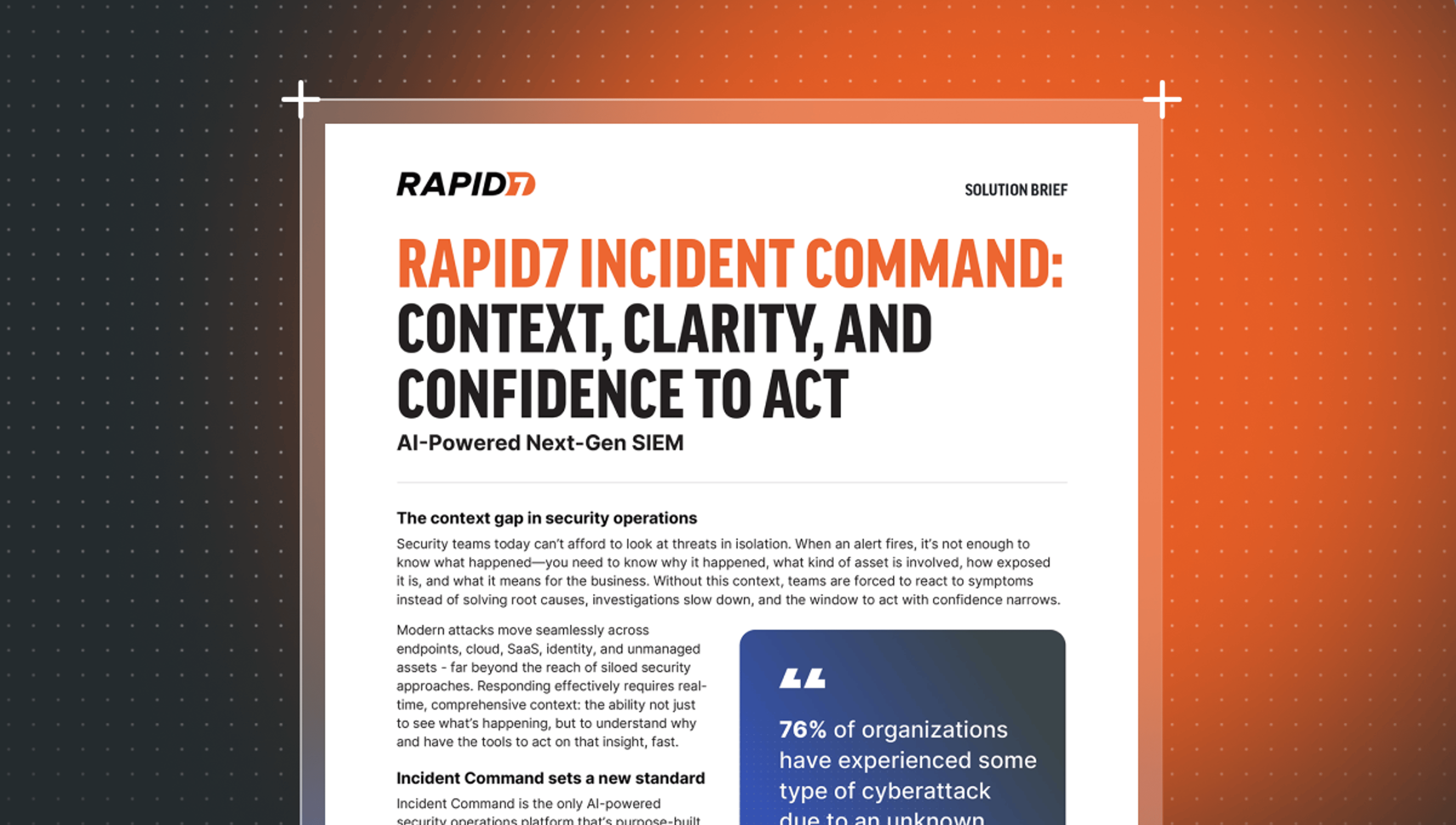
Rapid7 vs. Sumo Logic
Rapid7 Incident Command closes the gaps Sumo Logic’s lack of core features can leave behind through unified visibility, native automation, and actionable threat intelligence — supercharging threat investigations.
More than just logs, holistic security
Rapid7 combines logs, assets, cloud data, investigation and automation, and adversary context into a complete picture. Sumo Logic offers logs and limited SIEM.
AI and automation that seamlessly works
Incident Command delivers UBA/ABA detections, AI-powered log search and alert triage, and AI workflows. Sumo Logic relies on manual tuning and limited UBA.
Realize superior business value fast
Rapid7 is known for ease of deployment, intuitive workflows, and customer support, adding value from day one. Sumo Logic is known for its steep learning curve.
More than just logs, holistic security
Rapid7 combines logs, assets, cloud data, investigation and automation, and adversary context into a complete picture. Sumo Logic offers logs and limited SIEM.
AI and automation that seamlessly works
Incident Command delivers UBA/ABA detections, AI-powered log search and alert triage, and AI workflows. Sumo Logic relies on manual tuning and limited UBA.
Realize superior business value fast
Rapid7 is known for ease of deployment, intuitive workflows, and customer support, adding value from day one. Sumo Logic is known for its steep learning curve.
It is not just about checking more boxes, but we do anyway
| Use Case / Feature | Rapid7 | Sumo Logic |
|---|---|---|
limited customizability | ||
limited | ||
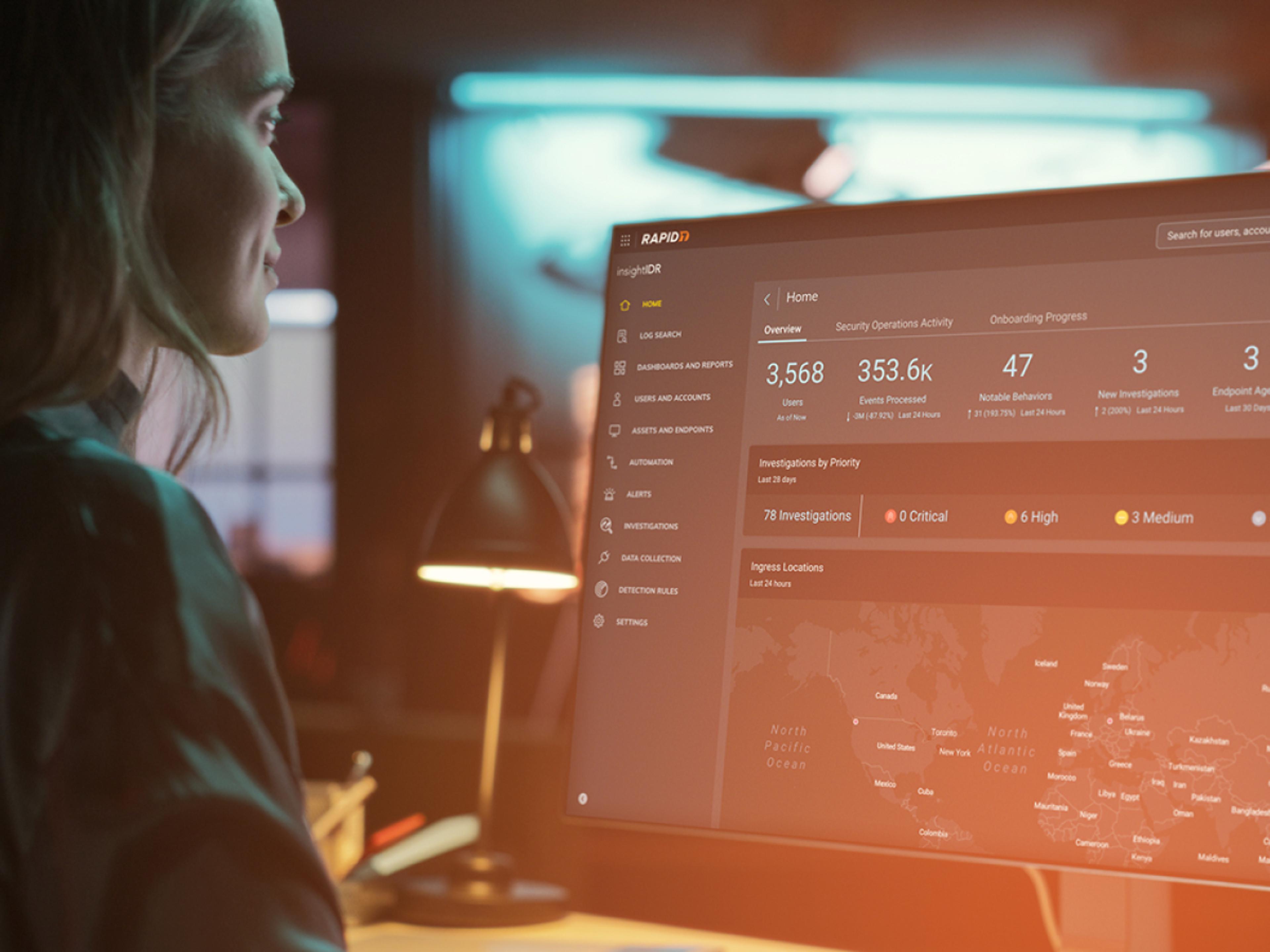
Scale SecOps with AI powered next-gen SIEM
Give your SOC the platform to see everything, understand anything, and act before attackers do.
A SIEM collects and analyzes security data to identify potential threats. Rapid7 Incident Command takes this further with built-in automation, unified threat intelligence, and full attack surface visibility. Unlike Sumo Logic Cloud SIEM, Rapid7 integrates SIEM, SOAR, and Attack Surface Management (ASM) capabilities to help analysts detect, investigate, and respond faster.
Incident Command delivers an all-in-one experience that combines log management, behavioral analytics, and AI-powered response. While Sumo Logic focuses primarily on log aggregation, Rapid7 unifies detection, automation, and attack surface context in a single workflow and solution, reducing complexity and helping teams act on real threats with confidence.
Incident Command deploys in hours, not weeks. It automatically normalizes and enriches data, eliminating the need for complex configuration. Compared to Sumo Logic’s manual setup for rules and dashboards, Rapid7 offers guided onboarding, prebuilt detections, and automation workflows that deliver immediate value and measurable time savings. Additionally, Sumo Logic’s steep learning curve and complex queries often slow adoption.
Rapid7 SIEM offers clear, asset-based pricing that scales predictably with your environment. Sumo Logic’s pricing is often data volume–based, leading to variable costs as log ingestion grows. Rapid7’s model eliminates surprise overages and simplifies budget planning while ensuring full access to automation, threat intelligence, and analytics.
Incident Command delivers visibility far beyond log data. It integrates Attack Surface Management (ASM), vulnerability intelligence, and exposure context, creating a live, unified picture of your environment. This enables faster prioritization and response, something traditional log-only SIEMs like Sumo Logic can’t provide at the same depth.
Yes. Incident Command uses AI-driven triage that automatically classifies 99.93% of benign alerts, reducing noise before it reaches analysts who ultimately determine an alert’s disposition. While Sumo Logic relies on manual rule tuning, Rapid7’s contextual intelligence and automation help teams focus on true threats, saving hundreds of analyst hours each week.
Incident Command delivers visibility far beyond log data. It integrates Attack Surface Management (ASM), vulnerability intelligence, and exposure context, creating a live, unified picture of your environment. This enables faster prioritization and response, something traditional log-only SIEMs like Sumo Logic can’t provide at the same depth.
Yes. Incident Command uses AI-driven triage that automatically classifies 99.93% of benign alerts, reducing noise before it reaches analysts who ultimately determine an alert’s disposition. While Sumo Logic relies on manual rule tuning, Rapid7’s contextual intelligence and automation help teams focus on true threats, saving hundreds of analyst hours each week.