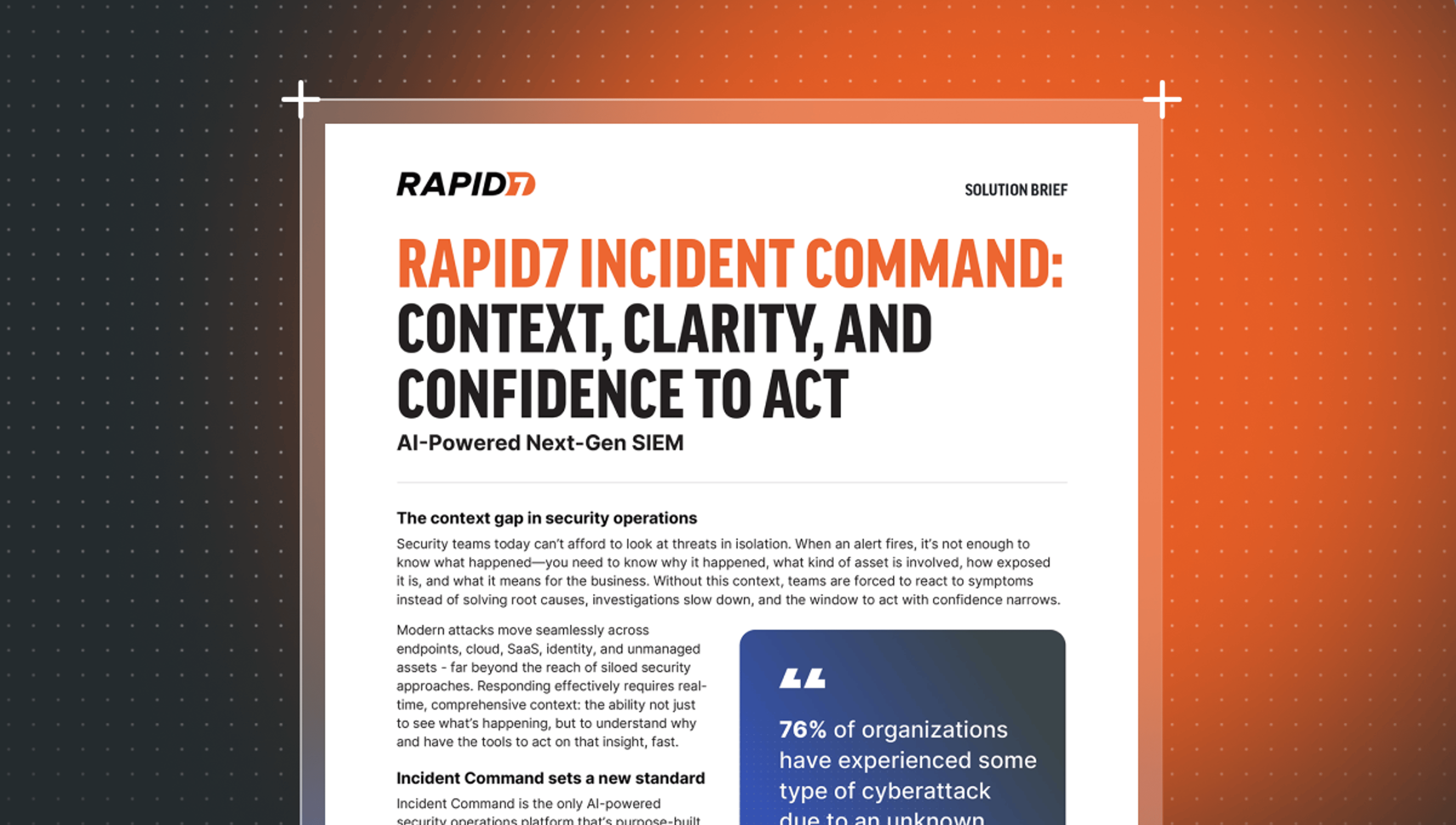
Rapid7 vs. IBM QRadar
IBM QRadar SaaS demands heavy resources, complex customization, and fragmented tools. Additionally, IBM QRadar customers face an imminent forced migration. Rapid7 Incident Command unifies SIEM, AI, and exposure management in one platform.
Unified AI-native architecture
Incident Command unifies detection, exposure visibility, and response, eliminating manual correlation so analysts can focus on threat hunting and response.
Out-of-the-box detection
Rapid7 delivers immediate, high-context threat detection curated by SOC experts. IBM QRadar requires heavy customization and more resources to reach full value.
Total attack surface visibility
Rapid7 integrates ASM with SIEM to map known, unknown, and shadow IT assets. IBM QRadar’s modular setup adds complexity and higher operational burden.
Unified AI-native architecture
Incident Command unifies detection, exposure visibility, and response, eliminating manual correlation so analysts can focus on threat hunting and response.
Out-of-the-box detection
Rapid7 delivers immediate, high-context threat detection curated by SOC experts. IBM QRadar requires heavy customization and more resources to reach full value.
Total attack surface visibility
Rapid7 integrates ASM with SIEM to map known, unknown, and shadow IT assets. IBM QRadar’s modular setup adds complexity and higher operational burden.
It is not just about checking more boxes, but we do anyway
| Use case/Feature | Rapid7 | IBM QRadar SaaS |
|---|---|---|
yes (built-in) | yes (bolt-on) | |
yes (not required) | no (required) | |
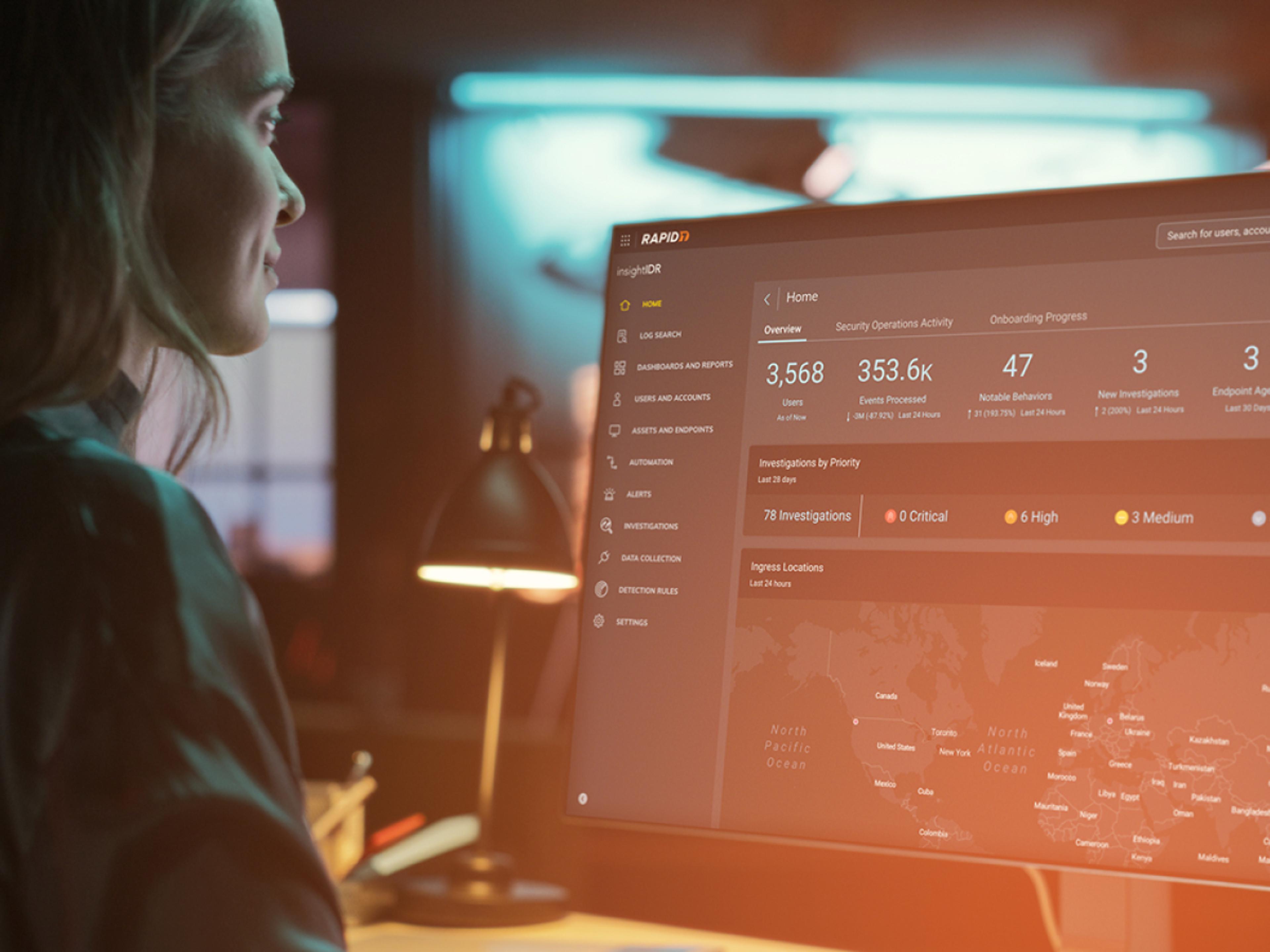
Scale SecOps with AI powered next-gen SIEM
Give your SOC the platform to see everything, understand anything, and act before attackers do.
A SIEM collects and correlates security events across your environment. Rapid7 Incident Command goes further, combining next-gen SIEM, automation, and attack surface management in one cloud-native platform. Compared to IBM QRadar SaaS, Rapid7 delivers faster insight, richer context, and unified threat visibility, reducing complexity and improving time-to-detection across hybrid environments.
Incident Command unifies prevention, detection, and response with integrated automation and threat intelligence. While QRadar SaaS focuses on log analytics, Rapid7 combines SIEM, SOAR, Attack Surface Management (ASM), and AI-powered investigation within one intuitive interface, helping analysts see, decide, and act faster using contextual intelligence from across the entire attack surface.
Yes. Incident Command features native SOAR capabilities and 550+ prebuilt workflows to automate triage, investigation, and response. Agentic AI guides every action, eliminating repetitive work, reducing mean time to respond (MTTR), and empowering teams to act confidently without needing separate orchestration tools or complex integrations.
Yes. Incident Command integrates natively with more than 290 tools, including EDR, cloud, identity, and network platforms. It unifies data from both Rapid7 and third-party sources into one view, so teams can centralize detection and response without rebuilding their existing tech stack or losing context.
Incident Command uses AI-driven triage to classify 99.93% of benign alerts automatically, surfacing only the threats that matter for analyst disposition. QRadar SaaS still requires manual rule tuning. Rapid7’s intelligent automation and risk-aware prioritization free analysts from noise, cutting alert volume and saving up to 200 hours weekly.
Yes. Incident Command comes preloaded with curated detections tested and validated by our MDR service that are mapped to MITRE ATT&CK®, user behavior analytics, and embedded threat intelligence. Analysts can detect, investigate, and respond from one interface, no third-party modules or add-ons required. This unified, AI-driven approach shortens investigation time and drives measurable SOC efficiency gains.